Deposit Limits and Spending Dynamics in the World of Online Casinos

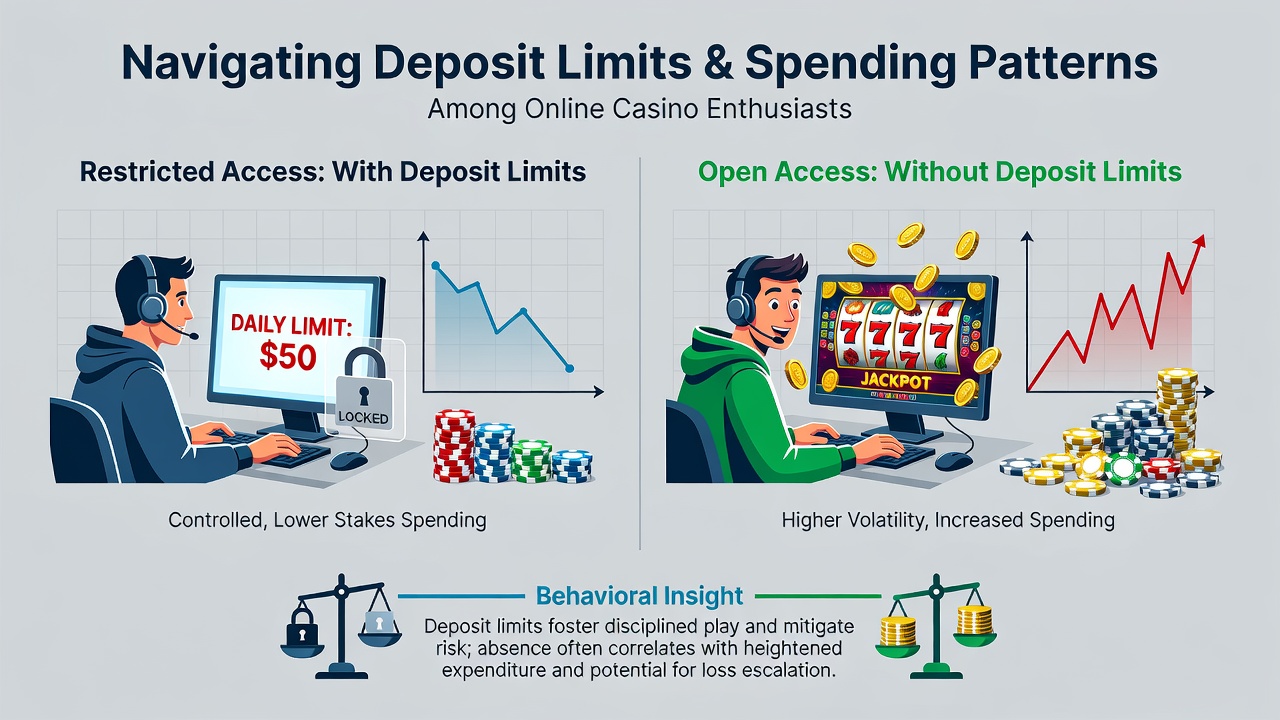
Deposit limits serve as tools that online casino operators implement to help users manage their financial activity, and researchers have documented how these mechanisms alter expenditure patterns over time. Data from multiple jurisdictions shows that players who activate voluntary caps often reduce their total deposits within the first three months of use, while those who encounter mandatory thresholds experience more abrupt adjustments in their betting frequency. Studies conducted across North America and Europe indicate that these limits interact with individual spending habits in ways that depend on player demographics, game preferences, and platform features.
Mechanics Behind Deposit Restrictions
Operators structure deposit limits through daily, weekly, or monthly ceilings that users can set themselves or that regulators require as standard options. When a player reaches the preset amount, the system blocks further transactions until the period resets, and this process creates a natural pause that interrupts impulse deposits. Regulatory frameworks in places such as the United States and Australia require platforms to offer these controls, while additional rules in certain provinces of Canada mandate that operators display real-time spending summaries alongside the limit settings. Observers note that the combination of visibility and enforcement produces measurable shifts because players receive immediate feedback on their cumulative activity rather than discovering totals only after the fact.
Observed Changes in Player Expenditure
Research published by the Australian Gambling Research Centre tracked thousands of accounts over twelve months and found that users who engaged with deposit limits decreased their average monthly spend by 18 to 27 percent compared with accounts that never activated the feature. The same analysis revealed that spending reductions occurred most consistently among players aged 25 to 34, whereas older cohorts showed smaller but still statistically significant declines. In parallel, data compiled by the Nevada Gaming Control Board during 2025 demonstrated that accounts subject to mandatory daily caps recorded fewer instances of large single-session deposits, suggesting that the limits redistributed activity across multiple smaller transactions rather than eliminating play altogether.
Regional Variations and June 2026 Developments
European markets have introduced additional layers of deposit management since early 2025, with several countries requiring operators to apply default limits that users must actively increase if they choose higher thresholds. These default settings have produced different outcomes than purely voluntary systems, because the friction involved in raising a cap discourages some players from escalating their activity. In June 2026, new reporting requirements scheduled to take effect in multiple EU member states will compel operators to publish anonymized aggregate data on limit usage and associated spending changes, which researchers expect will allow more precise cross-border comparisons. Meanwhile, Canadian provinces continue to refine their approaches, with Ontario’s regulator testing automated reminders that activate when a player approaches 75 percent of their chosen limit, a measure that preliminary internal reports suggest further moderates deposit velocity.
Interaction With Game Types and Session Length
Slot enthusiasts tend to respond differently to deposit limits than table game players because slots encourage more frequent but smaller bets, and the limits therefore intersect with session length in distinct ways. One study released by the University of Nevada, Reno, examined session logs and determined that slot players who set weekly caps shortened their average play sessions by roughly 14 minutes while maintaining similar bet sizes, whereas blackjack participants more often reduced bet amounts and kept session durations steady. These patterns emerge because the structure of each game interacts with the timing of deposit blocks, and operators have begun adjusting user interface elements such as session timers and loss-limit pairings to complement the deposit controls.
Long-Term Behavioral Adjustments
Longitudinal tracking indicates that the initial reduction in spending often stabilizes after six months rather than continuing to decline, which suggests that players recalibrate their habits around the new boundaries instead of abandoning play. Accounts that repeatedly attempt to raise limits after hitting them show smaller overall reductions, yet even these users deposit less than comparable accounts without any limits in place. Industry reports compiled by the European Gaming and Betting Association highlight that educational prompts displayed at the point of limit selection correlate with higher retention of the chosen cap over successive months, because players receive clearer explanations of how the restriction functions before committing to it.
Conclusion
Deposit limits function as structural interventions that reshape spending trajectories across diverse player populations, and evidence gathered from regulatory bodies in North America, Europe, and Australia demonstrates consistent directional effects even when implementation details vary. As new data collection standards roll out in June 2026 and beyond, researchers will gain finer-grained insight into which combinations of limits, reminders, and game-specific features produce the most stable adjustments in expenditure. The ongoing evolution of these tools reflects broader efforts to align platform design with documented patterns of player financial behavior.