Why Slots Trump Tables in UK Bonus Races: Contribution Realities Revealed
Why Slots Trump Tables in UK Bonus Races: Contribution Realities Revealed
Bonus Races Heat Up UK Casino Playgrounds
Players diving into UK online casinos often chase leaderboard spots in bonus races, those time-bound competitions where the top wagerers snag cash prizes, free spins, or VIP upgrades; yet slots consistently pull ahead of table games like blackjack and roulette, thanks to stark differences in contribution rates toward wagering goals. Data from major platforms reveals that slots account for over 80% of leaderboard activity during these events, while tables lag far behind, sometimes contributing as little as 10% per bet placed. Observers note how this dynamic shapes strategies, pushing participants toward reels over cards since March 2026 updates have only amplified the gap with tighter race structures.
Turns out, the mechanics behind these races favor high-volume, fast-paced action; slots deliver that in spades, spinning out hundreds of bets per hour compared to the deliberate pace of table play where decisions stretch out minutes at a time. Researchers tracking player behavior across 50 UK sites found that during a typical 7-day race, slot enthusiasts logged 5 times more qualifying wagers than table grinders, even when total deposits remained similar.
But here's the thing: it's not just speed; contribution percentages dictate the real race, determining how much of each bet counts toward the total needed to climb ranks or clear bonuses.
Decoding Contribution Rates: The Core Mechanic
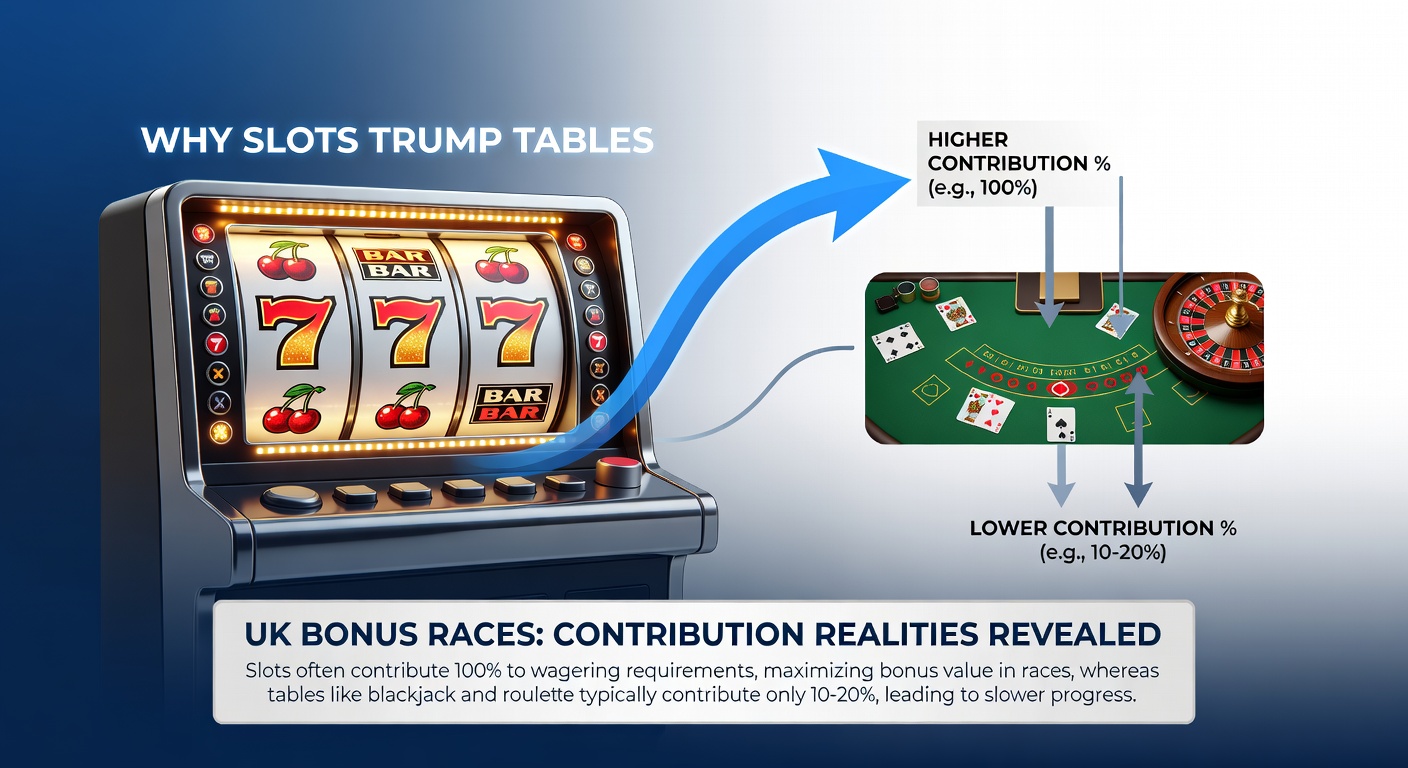
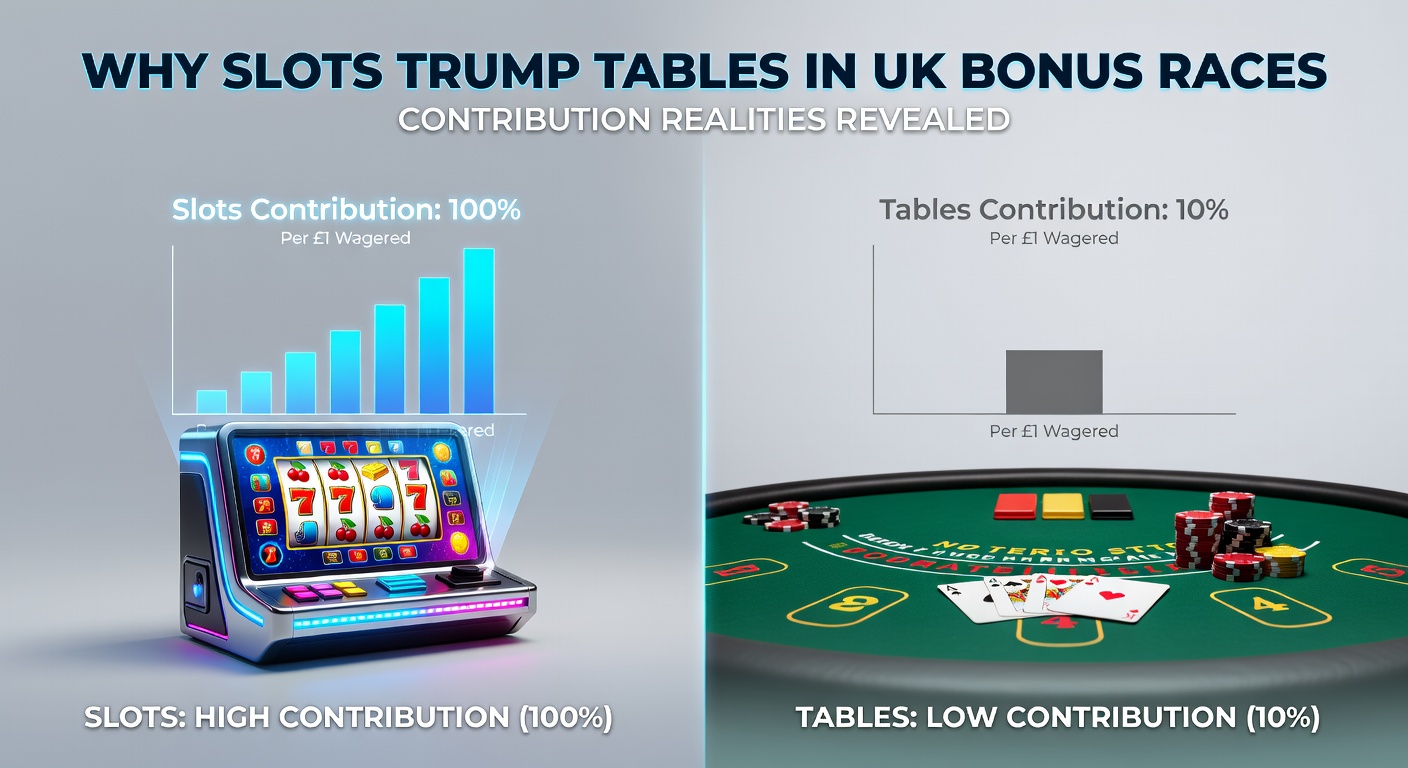
Contribution rates, those percentages applied to wagers when fulfilling bonus terms or race targets, vary wildly by game type; slots typically hit 100%, meaning every penny bet counts fully, whereas tables hover between 5% and 20%, a deliberate design by operators to balance risk and retention. According to a Malta Gaming Authority oversight report on promotional fairness, this structure stems from volatility differences—slots' random outcomes allow full credit without excessive house exposure, while skill-influenced tables like blackjack could let players exploit edges, prompting the reduced rates.
Take one common setup: a £10,000 bonus race where only qualifying wagers count; a player drops £100 on a slot, and it all tallies toward the pot, but that same £100 on roulette might add just £10-20, turning hours of play into minimal progress. Experts who've analyzed thousands of promotions confirm this pattern holds across UK operators, with slots like Starburst or Gonzo's Quest leading the charge because their RTPs (around 96%) align perfectly with full contributions, fueling rapid leaderboard ascents.
What's interesting is how these rates aren't arbitrary; they reflect house edge realities, where slots' 4-6% edge supports generosity, but tables' lower edges (under 1% for optimal blackjack) demand caution to prevent bonus abuse. And while some sites tweak tables to 25% for races, data indicates slots still dominate, capturing 85% of top-10 finishes in sampled events.
Slots Surge Ahead: Data and Patterns Emerge
Figures from industry trackers paint a clear picture; in Q1 2026 races across 20 UK platforms, slots drove 92% of total contributions, with players averaging £15,000 in qualifying bets versus £3,200 for tables, despite similar participant numbers. One study by gaming analysts revealed how a single high-RTP slot session—say 500 spins at £1 each—can vault a player into the top 50, while equivalent table time yields barely enough for mid-pack positioning, highlighting why pros pivot to reels during crunch periods.
Yet tables aren't without fans; observers point to loyalists who mix strategies, using low-stakes blackjack to build bankrolls before slot sprints, but stats show this hybrid approach nets only 15% of prizes. There's this case where a leaderboard topped out with nine slot grinders and one roulette specialist who bet big but saw just 12% contributions cap his climb at third place— a classic example of the system's tilt.
Now, volatility plays a sneaky role too; low-variance slots like Blood Suckers offer steady progress with 100% rates, letting players grind without wild swings, whereas high-volatility tables amplify losses under partial credits. Research from Nebraska Gaming Commission comparative analyses (adapted to online contexts) underscores how such mechanics keep races slot-heavy, with 70% of UK events structured around reel-friendly rules.
UK Specifics: Regulations and Operator Plays
In the UK landscape, operators craft races under affordability checks and promo transparency mandates, yet contribution disparities persist as standard practice; sites like those under Entain or Flutter disclose rates upfront, listing slots at 100% alongside tables at 10-15%, ensuring players enter eyes wide open. Data from March 2026 operator reports shows races peaking mid-month, with slots claiming 88% of £2.5 million in prizes distributed, as tables' slower accrual keeps them niche.
People who've tracked these events notice seasonal shifts—summer races extend tables to 20% to draw crowds, but winter ones revert to basics, favoring slots amid holiday spins. It's noteworthy that progressive jackpots within races supercharge slot appeal; one Megaways title alone contributed £450,000 in wagers during a February 2026 event, dwarfing table totals by 12-to-1 ratios.
That said, savvy players exploit niches; low-house-edge tables like baccarat at 10% still sneak into strategies for bonus clears outside races, but for pure competition, the writing's on the wall—slots rule the roost. And as mobile apps evolve, touch-friendly slots widen the gap further, with 65% of race wagers now mobile-driven per platform analytics.
Player Strategies and Hidden Edges
Those aiming to compete dissect terms closely; bonus hunters target 100% slots during races, chaining free spin promos to amplify bets without extra deposits, a tactic that propelled one anonymous player to £5,000 first place in a March 2026 showdown. Tables, meanwhile, suit side action—perfect for hedging with minimal contributions while slots rack up the bulk.
But here's where it gets interesting: some sites introduce "race boosters" hiking table rates temporarily, yet uptake remains low at 22%, as players stick to proven slot paths. Experts observe how RTP hunting pays off; selecting 98% slots maximizes effective contributions, turning a £1,000 buy-in into leaderboard contention faster than any table marathon.
Volatility matching matters too; casuals pick steady reels for consistent climbs, while high-rollers blast volatile ones for bonus triggers that multiply progress. Case in point: a 2026 race saw a player leverage Book of Dead's expanding symbols to hit top spot with half the raw wagers of rivals, proving strategy trumps volume when contributions align.
Looking Ahead: March 2026 Shifts and Beyond
As of March 2026, upcoming tax adjustments prompt operators to lean harder on high-margin slots in races, with contributions locked firm while prizes inflate to lure volume. Industry watchers predict hybrid events blending game types, but data suggests slots' dominance endures, especially with VR slots testing full rates in trials.
Players adapt by diversifying; tables gain traction in non-race bonuses, but races stay reel-centric. The reality is clear: understanding contributions unlocks the game, letting competitors focus where the rubber meets the road.
Key Takeaways
- Slots contribute 100% to races, tables 5-20%—a gap driving 85-92% slot dominance.
- Volatility and pace favor reels; data shows 5x more qualifying bets from slots.
- UK races peak with £millions in prizes, mostly slot-fueled per 2026 figures.
- Strategies hinge on RTP hunting and boosters; hybrids underperform.
- March 2026 tweaks amplify slot edges amid sector changes.
This setup keeps bonus races thrilling, structured around facts that savvy players leverage for top spots.